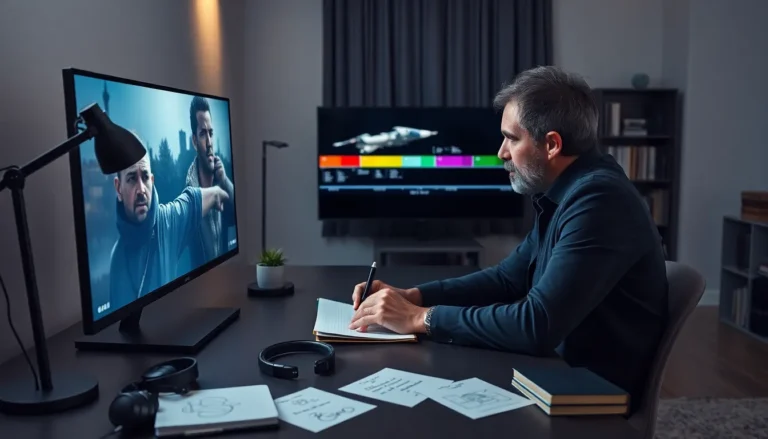
Movie breakdowns ideas offer content creators and film enthusiasts fresh ways to explore cinema. Whether someone runs a YouTube channel, writes blog posts, or simply wants deeper discussions with friends, analyzing films goes far beyond “I liked it” or “It was boring.”
The best movie breakdowns connect viewers to what makes a film work, or fail. They reveal craft, intention, and meaning that casual viewing often misses. This article covers five proven approaches to movie breakdowns ideas that generate engagement and spark real conversation. From dissecting individual scenes to comparing adaptations with their source material, these methods give creators and cinephiles a structured way to dig into any film.
Table of Contents
ToggleKey Takeaways
- Movie breakdowns ideas help creators and film enthusiasts analyze cinema through structured approaches like scene-by-scene analysis, character arcs, and visual storytelling.
- Scene-by-scene analysis forces close attention to pacing, dialogue, and visual choices—watch scenes with sound off and track each editorial cut.
- Character arc breakdowns reveal transformation by mapping turning points and asking whether a character earns their ending.
- Cinematography breakdowns decode visual grammar, examining lighting, camera movement, color palette, and framing to explain why a film looks compelling.
- Thematic and symbolic interpretations uncover deeper meaning by identifying motifs and supporting every claim with specific scenes.
- Adaptation comparisons examine what changes when source material becomes a film and why those creative decisions matter.
Scene-by-Scene Analysis
Scene-by-scene analysis breaks a film into its smallest storytelling units. This approach works especially well for movie breakdowns ideas because it forces close attention to pacing, dialogue, and visual choices.
Start by selecting a pivotal scene. The opening of Inglourious Basterds offers a masterclass in tension-building. Tarantino stretches a simple conversation across twenty minutes, and every line serves a purpose. A good breakdown would examine how silence works, why the camera holds certain shots, and what information the audience receives versus what characters know.
Creators can also compare scenes across different films. How does Christopher Nolan handle exposition versus Denis Villeneuve? What makes one chase sequence thrilling while another feels flat?
Practical tips for scene-by-scene movie breakdowns ideas:
- Watch the scene multiple times with sound off, then without visuals
- Note each cut and ask why the editor made that choice
- Track the emotional arc from the scene’s first frame to its last
- Identify the scene’s core conflict and how it resolves
This method produces content that helps audiences see familiar films differently. It also trains the analyst to notice craft elements they might otherwise miss.
Character Arc Breakdowns
Character arc breakdowns focus on transformation. How does a character change from a film’s beginning to its end? What forces that change? These questions drive some of the most engaging movie breakdowns ideas.
Take Walter White from Breaking Bad, though it’s television, the principle applies. His arc from mild chemistry teacher to drug kingpin follows clear beats. A breakdown would identify each turning point: the diagnosis, the first cook, the first murder, the moment he chooses empire over family.
Film offers compressed versions of this structure. Michael Corleone in The Godfather starts as a war hero who wants nothing to do with family business. By the final shot, he’s become his father. A strong character arc breakdown maps this transformation scene by scene.
Questions to guide character arc movie breakdowns ideas:
- What does the character want at the start? What do they want at the end?
- What’s the difference between their stated goal and their real need?
- Which moment marks the point of no return?
- Does the character earn their ending, or does it feel forced?
Audiences love character breakdowns because they clarify emotional journeys. They also reveal weak writing, when a character changes without sufficient motivation, a breakdown exposes that gap.
Cinematography and Visual Storytelling
Cinematography breakdowns examine how directors and DPs tell stories through images. This category of movie breakdowns ideas appeals to viewers who want to understand visual grammar.
Roger Deakins’ work in Blade Runner 2049 demonstrates intentional composition in every frame. The film uses negative space to emphasize isolation. Colors shift based on location and emotional state. A cinematography breakdown would decode these choices and explain their effect on viewers.
Key elements to analyze:
- Lighting: Hard light creates harsh shadows and tension. Soft light suggests warmth or safety. How does lighting shift throughout a scene?
- Camera movement: Does the camera stay still or move with characters? Tracking shots create different feelings than locked-off compositions.
- Color palette: Warm tones versus cool tones carry emotional weight. Some films use color to distinguish timelines or locations.
- Framing: Where characters sit in the frame matters. Center framing suggests stability. Off-center compositions create unease.
Movie breakdowns ideas focused on visuals work best with specific examples. Instead of saying “this film looks good,” a strong breakdown shows exactly why. It might compare two frames from the same scene, explaining how a slight camera angle change shifts meaning.
Visual analysis also connects to theme. In Parasite, vertical space matters, the wealthy family lives uphill, the poor family below. Bong Joon-ho reinforces class division through physical geography. That’s the kind of insight cinematography breakdowns can deliver.
Thematic and Symbolic Interpretations
Thematic breakdowns dig into what a film means beyond its plot. These movie breakdowns ideas examine symbols, motifs, and underlying messages.
Consider Get Out. On the surface, it’s a horror film about a Black man meeting his white girlfriend’s family. A thematic breakdown reveals layers about appropriation, liberal racism, and bodily autonomy. The sunken place becomes a symbol for marginalization. The deer represents Chris’s trauma and his eventual agency.
Effective thematic movie breakdowns ideas require evidence. Every interpretation needs supporting scenes. If someone claims a film is about grief, they should point to specific moments that support that reading.
Common thematic lenses for breakdowns:
- Political readings: What does the film say about power, class, or institutions?
- Psychological analysis: How do characters represent different aspects of the human psyche?
- Genre conventions: Does the film follow or subvert expectations? What does that choice mean?
- Historical context: How does the film reflect the era in which it was made?
Symbol-focused breakdowns identify recurring images or objects. Water often represents rebirth or danger. Mirrors can signal duality or self-reflection. Birds might symbolize freedom or death. The key is showing how a symbol functions within a specific film rather than applying generic definitions.
Thematic breakdowns attract audiences who want deeper conversations. They transform casual viewers into active interpreters.
Comparing Source Material to Adaptations
Adaptation comparisons form a rich category of movie breakdowns ideas. They examine what changes when a book, comic, or true story becomes a film, and why those changes matter.
The Shining offers a famous case study. Stephen King’s novel focuses on Jack Torrance’s internal struggle against the hotel’s influence. Kubrick’s film presents Jack as already unstable. Neither version is “right,” but comparing them reveals different storytelling goals. King wrote about addiction and family trauma. Kubrick made a film about isolation and madness.
Strong adaptation breakdowns ask specific questions:
- What did the filmmakers add that wasn’t in the source?
- What did they remove, and what effect does that have?
- How do medium differences explain certain changes?
- Does the adaptation capture the source’s spirit even when details differ?
Comic book movies generate endless adaptation content. Fans debate whether changes improve or diminish the original. A good breakdown moves beyond “they changed it” to explain what the change accomplishes. Maybe a character consolidation streamlines the plot. Maybe a tonal shift targets a broader audience.
Movie breakdowns ideas about adaptations also work for true stories. The Social Network takes liberties with documented events. A breakdown could examine which changes serve drama and which distort history.
These comparisons appeal to fans of both versions. They also help audiences appreciate adaptation as creative work rather than mere translation.