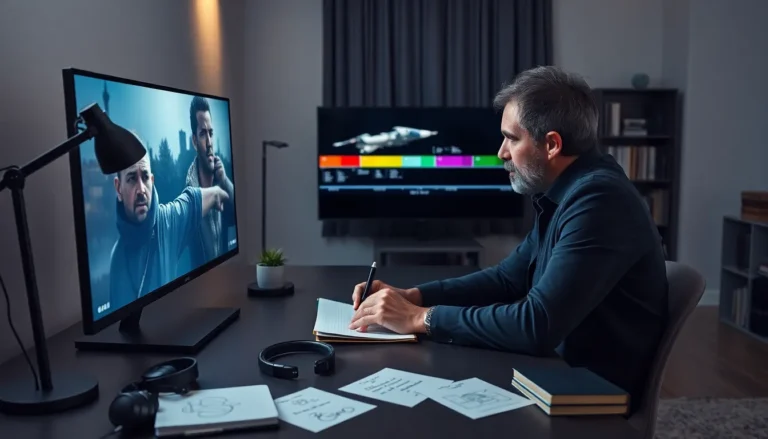
Movie breakdown strategies help viewers see films through a sharper lens. Whether someone watches for pleasure or studies cinema professionally, breaking down a movie reveals layers that casual viewing misses. A great film hides its craft in plain sight. The director’s choices, the editor’s cuts, and the writer’s dialogue all work together to create emotional impact. Learning to dissect these elements transforms passive watching into active analysis.
This guide covers the essential movie breakdown strategies that critics, filmmakers, and serious cinephiles use. Readers will learn how to examine narrative structure, visual storytelling, character arcs, and dialogue with precision. By the end, anyone can approach their next film with the tools to analyze it like a professional.
Table of Contents
ToggleKey Takeaways
- Movie breakdown strategies transform passive viewing into active analysis by examining narrative, visual, auditory, and performative elements.
- Start every breakdown by mapping the story arc—identify the inciting incident, midpoint, climax, and resolution to understand narrative structure.
- Visual storytelling analysis should focus on shot selection, camera movement, lighting, color grading, and frame composition to uncover how meaning is conveyed without words.
- Strong character arcs and subtext-rich dialogue drive emotional engagement and deserve close examination in any film analysis.
- Watch films at least twice—once for emotional response and once for analytical observation—to apply movie breakdown strategies effectively.
- Compare films within the same genre and discuss your observations with others to sharpen critical thinking and catch blind spots.
Understanding the Core Elements of Film Analysis
Every movie breakdown starts with identifying the core elements that make films work. These elements fall into several categories: narrative, visual, auditory, and performative.
Narrative elements include plot, theme, and story structure. Visual elements cover cinematography, color grading, and shot composition. Auditory elements involve sound design, music, and dialogue delivery. Performative elements focus on acting choices and character portrayal.
Effective movie breakdown strategies require viewers to isolate each element before examining how they interact. A horror film, for example, relies heavily on sound design to build tension. A romantic drama might lean more on dialogue and close-up shots to convey emotion.
The key is observation without judgment, at least initially. Analysts should note what they see and hear before deciding whether those choices succeed or fail. This approach prevents bias from clouding the breakdown process.
Take note of recurring patterns. Does the director favor long takes or quick cuts? Does the color palette shift during emotional scenes? These patterns reveal intentional choices that shape viewer experience.
Breaking Down Narrative Structure and Story Arc
Narrative structure forms the backbone of any film. Most movies follow a three-act structure: setup, confrontation, and resolution. But, many filmmakers experiment with non-linear storytelling, multiple timelines, or unconventional act breaks.
Movie breakdown strategies should start by mapping the story arc. Identify the inciting incident, the event that sets the plot in motion. Find the midpoint, where stakes typically escalate. Locate the climax and observe how the resolution ties loose ends together.
Consider Christopher Nolan’s “Memento.” Its reverse chronology forces viewers to experience confusion alongside the protagonist. The narrative structure isn’t a gimmick: it serves the story’s themes about memory and identity.
Theme analysis goes hand-in-hand with structure. Ask what the film is really about beneath its surface plot. A superhero movie might explore themes of responsibility. A war film might examine the cost of violence on human psychology.
Subplots deserve attention too. Strong subplots reinforce the main theme or provide contrast. Weak subplots feel disconnected and waste screen time. Noting how subplots integrate into the main story reveals the screenwriter’s skill level.
Pacing matters in narrative breakdown. Does the film drag during the second act? Does the ending feel rushed? These observations help explain why some films succeed emotionally while others fall flat even though solid premises.
Analyzing Visual Storytelling and Cinematography
Visual storytelling communicates meaning without words. Cinematographers use camera angles, movement, lighting, and composition to guide viewer attention and emotion.
Movie breakdown strategies for visual analysis start with shot selection. Wide shots establish setting and scale. Medium shots capture interaction between characters. Close-ups reveal emotion and detail. Extreme close-ups create intimacy or unease.
Camera movement tells its own story. A tracking shot following a character suggests pursuit or journey. A static camera can convey stability or entrapment depending on context. Handheld shots add urgency and realism.
Lighting choices shape mood dramatically. High-key lighting creates openness and clarity. Low-key lighting with harsh shadows suggests danger or moral ambiguity. Notice where light sources appear within the frame, motivated lighting from windows or lamps feels natural, while unmotivated lighting can feel stylized or dreamlike.
Color grading has become increasingly important in modern cinema. Many films use distinct color palettes to differentiate timelines, locations, or emotional states. “Mad Max: Fury Road” uses saturated oranges and teals to create its distinctive post-apocalyptic look.
Frame composition deserves close study. The rule of thirds, leading lines, and negative space all influence how viewers interpret scenes. A character placed at the edge of the frame might feel isolated. Symmetrical composition can suggest order or artificiality.
Compare the visual approach across different scenes. Does the style shift during pivotal moments? These variations often signal emotional or thematic changes.
Evaluating Character Development and Dialogue
Characters drive emotional engagement. Movie breakdown strategies must examine how characters change, or fail to change, throughout the story.
Strong character arcs show transformation. A protagonist should face challenges that force growth or reveal hidden depths. Static characters work in some contexts but often feel less satisfying. Note the specific moments where characters make crucial decisions that define who they are.
Dialogue serves multiple purposes beyond conveying information. It reveals character personality, advances plot, and establishes relationships. Good dialogue sounds natural while remaining purposeful. Every line should accomplish something.
Subtext makes dialogue memorable. Characters rarely say exactly what they mean, especially during conflict. The gap between spoken words and true intentions creates tension and invites audience interpretation.
Consider how actors deliver their lines. Pauses, inflection, and body language add meaning that the script alone cannot provide. The same line read differently can shift a scene’s entire tone.
Relationships between characters need examination too. How do characters speak to each other differently based on their history and power dynamics? A child speaking to a parent sounds different than that same child speaking to a friend.
Secondary characters deserve analysis. Do they exist merely to serve the protagonist, or do they feel like complete people with their own motivations? Well-developed supporting characters enrich the world of the film.
Practical Tips for Effective Movie Breakdowns
Successful movie breakdown strategies require both preparation and practice. Here are actionable tips for better analysis.
Watch twice, minimum. The first viewing captures emotional response. The second allows analytical observation without the distraction of following the plot.
Take timestamped notes. Record observations with specific timestamps for easy reference. Note moments that feel significant even if the reason isn’t immediately clear.
Pause and rewind freely. Freeze frames reveal details invisible at normal speed. Rewinding dialogue helps catch subtext missed the first time.
Research the context. Understanding when a film was made, who made it, and what influenced its creation adds depth to analysis. A 1950s film reflects different social values than a 2020s remake.
Compare similar films. Placing a movie alongside others in its genre highlights what makes it unique or conventional. Comparison sharpens critical thinking.
Read professional reviews after forming opinions. This prevents bias while still benefiting from expert perspectives. Disagreeing with critics is perfectly valid and often instructive.
Practice writing breakdowns. Articulating observations in writing forces clarity. Even informal notes improve analytical skills over time.
Discuss with others. Different viewers notice different things. Conversation expands perspective and catches blind spots.